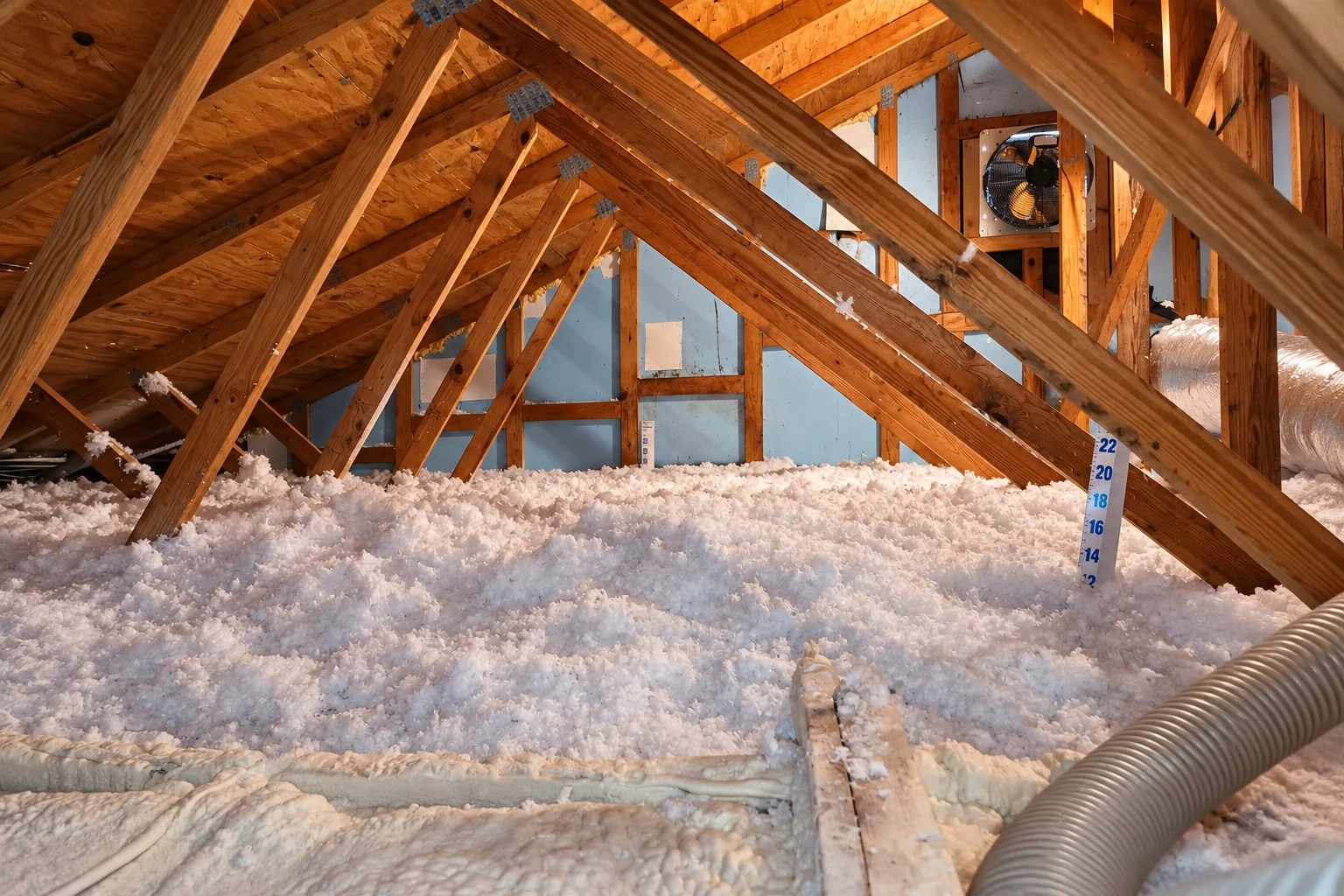
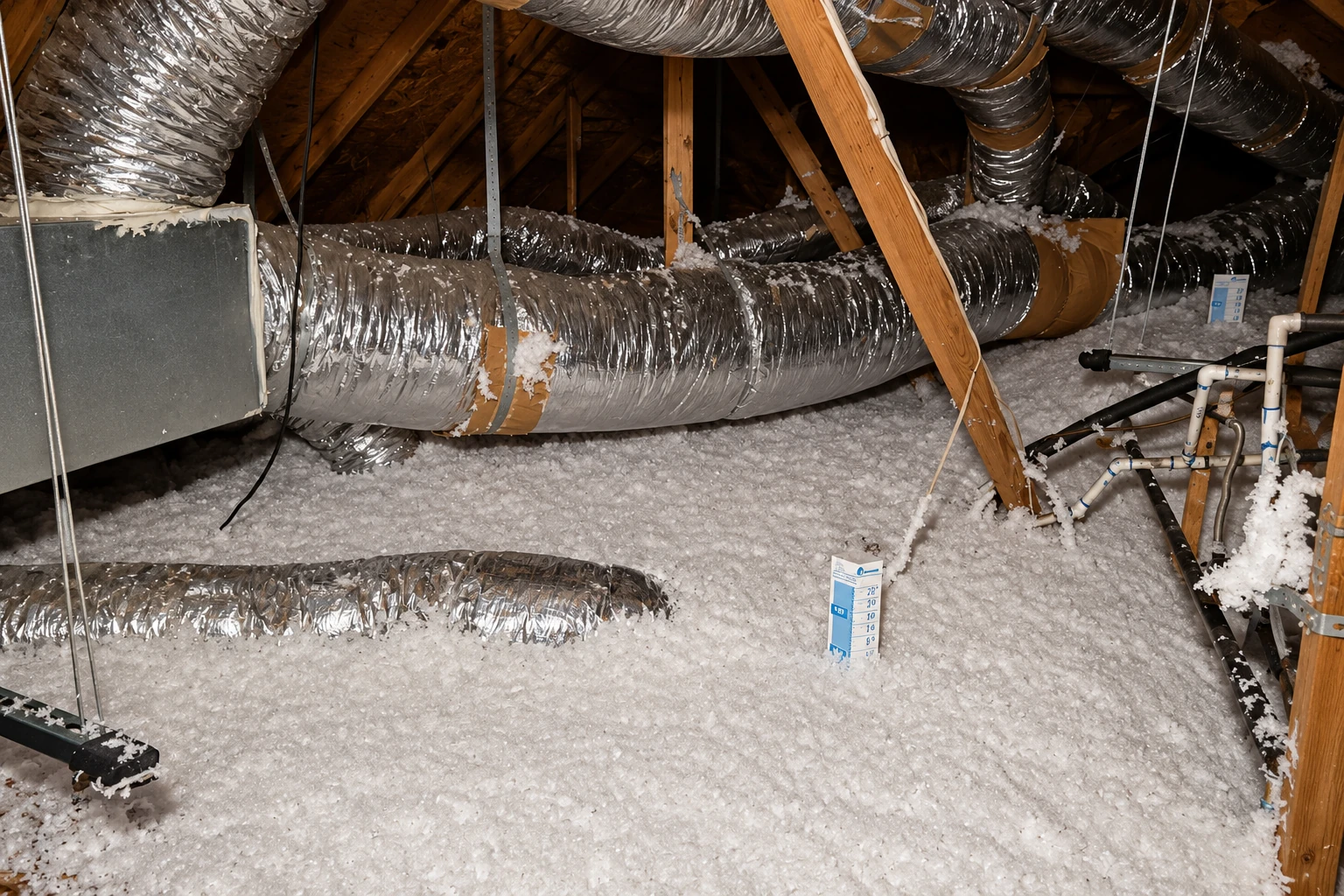
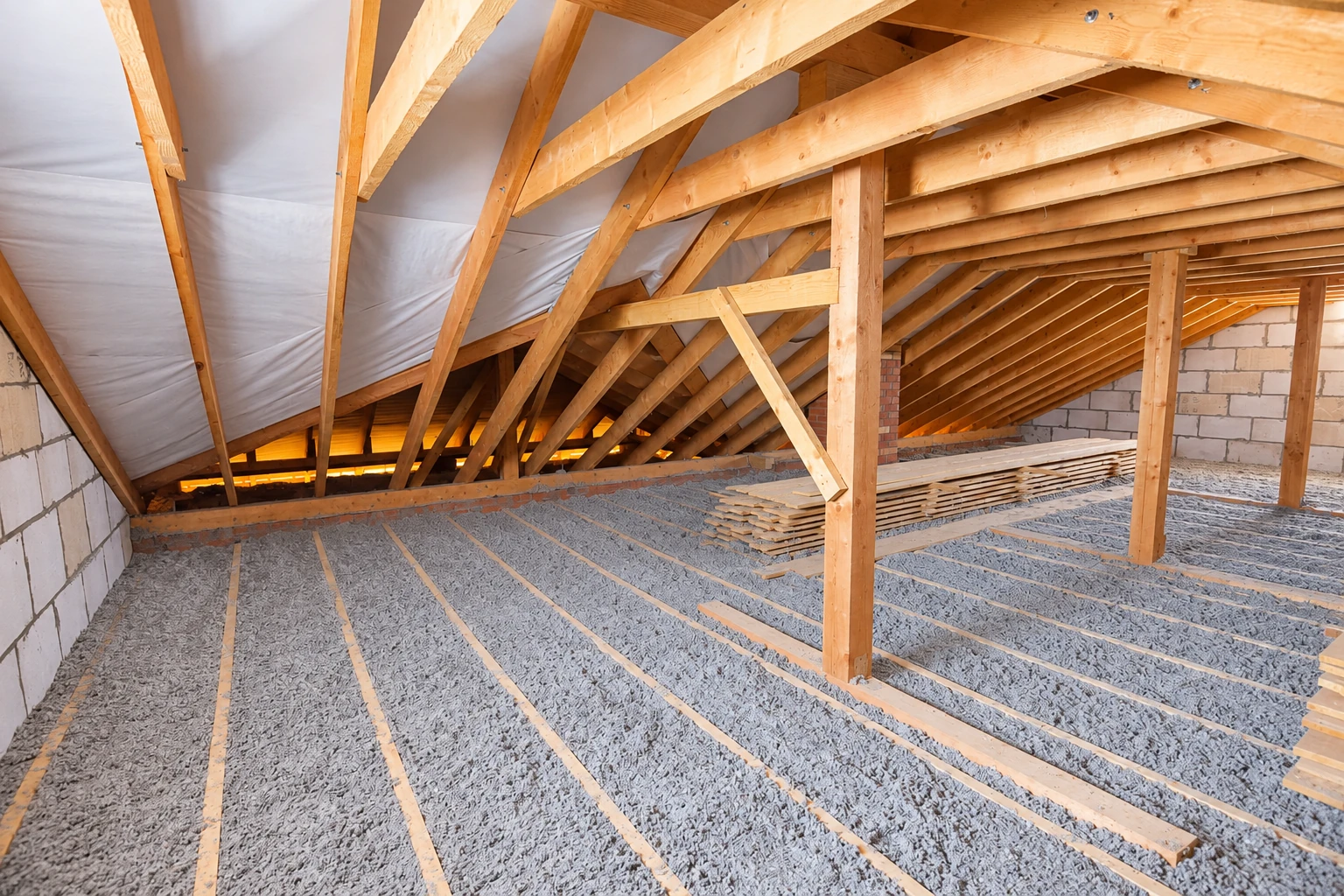
Blown-in insulation in Norman OK - an even attic layer that reaches the edges
If the upstairs runs hot and the attic floor looks thin, we seal the gaps and blow in an even layer out to the eaves.
- Service
- Blown-in insulation
- Call
- (405) 561-8031
How can you tell your attic needs more insulation?
Upstairs rooms stay hot
The bedrooms upstairs are still warm at bedtime after the rest of the house has cooled off. That usually means the attic floor is thin in spots or air is leaking up around the ceiling, and the longer it goes, the harder your AC works to keep up.
Joists showing in the attic
If you look through the hatch and can see the tops of the ceiling joists, the wood beams your ceiling hangs from, the fill has sunk or was never deep enough. Heat goes straight through those bare strips every season you leave them.
Stains or clumped, damp fill
A brown ring on a top-floor ceiling or matted, clumpy insulation usually points to a roof leak or a fan venting into the attic. Left alone, the water keeps soaking the framing, and any new fill blown over it gets ruined too.
Is blown-in insulation right for my attic in Norman?
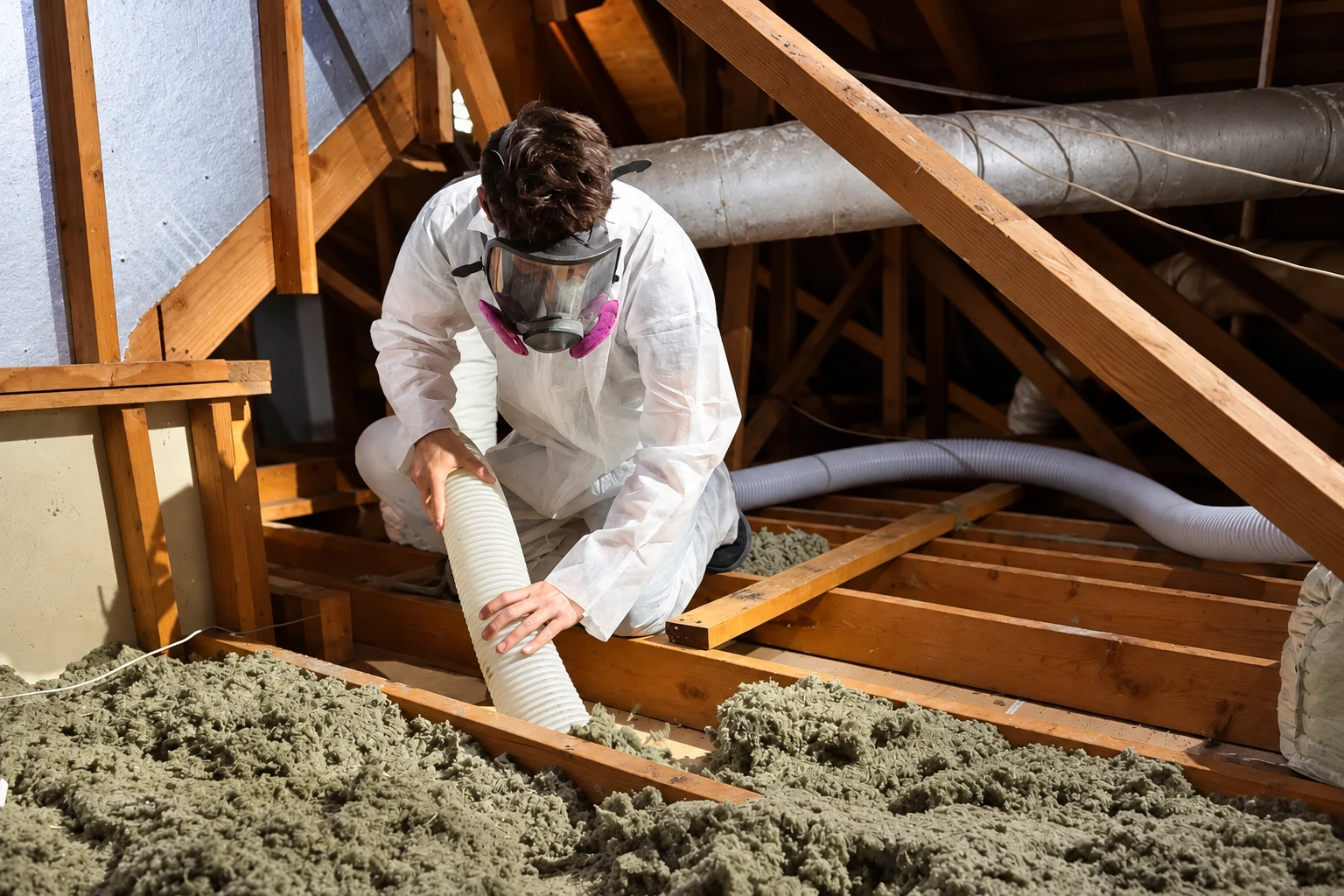
Blown-in insulation is loose fill, usually cellulose or fiberglass, that we blow through a hose across your attic floor in Norman, OK, so the whole ceiling gets an even layer out to the tops of the walls and slows heat moving between your rooms and the attic.
Most people call because a bedroom upstairs won't cool off or the power bill keeps climbing, and when they finally look in the attic, the layer is thin and lumpy. The price usually turns on the size of the attic floor, how many inches are already up there, which material fits your house and what has to be fixed before the new fill goes in, like a roof leak or a wet layer, and that same prep work is what sets the schedule. Permit rules differ from city to city, so we check with Norman's building permits and inspections office before work starts, and if your job needs a permit we pull it or walk you through getting one. You'll get your own figure in writing after I've been up in the attic.
Details to note before an estimate
- Rough size of the attic floor
- Inches of insulation already up there
- Recessed lights in the top-floor ceiling
- Roof leaks or stains on ceilings
How we put in blown-in insulation
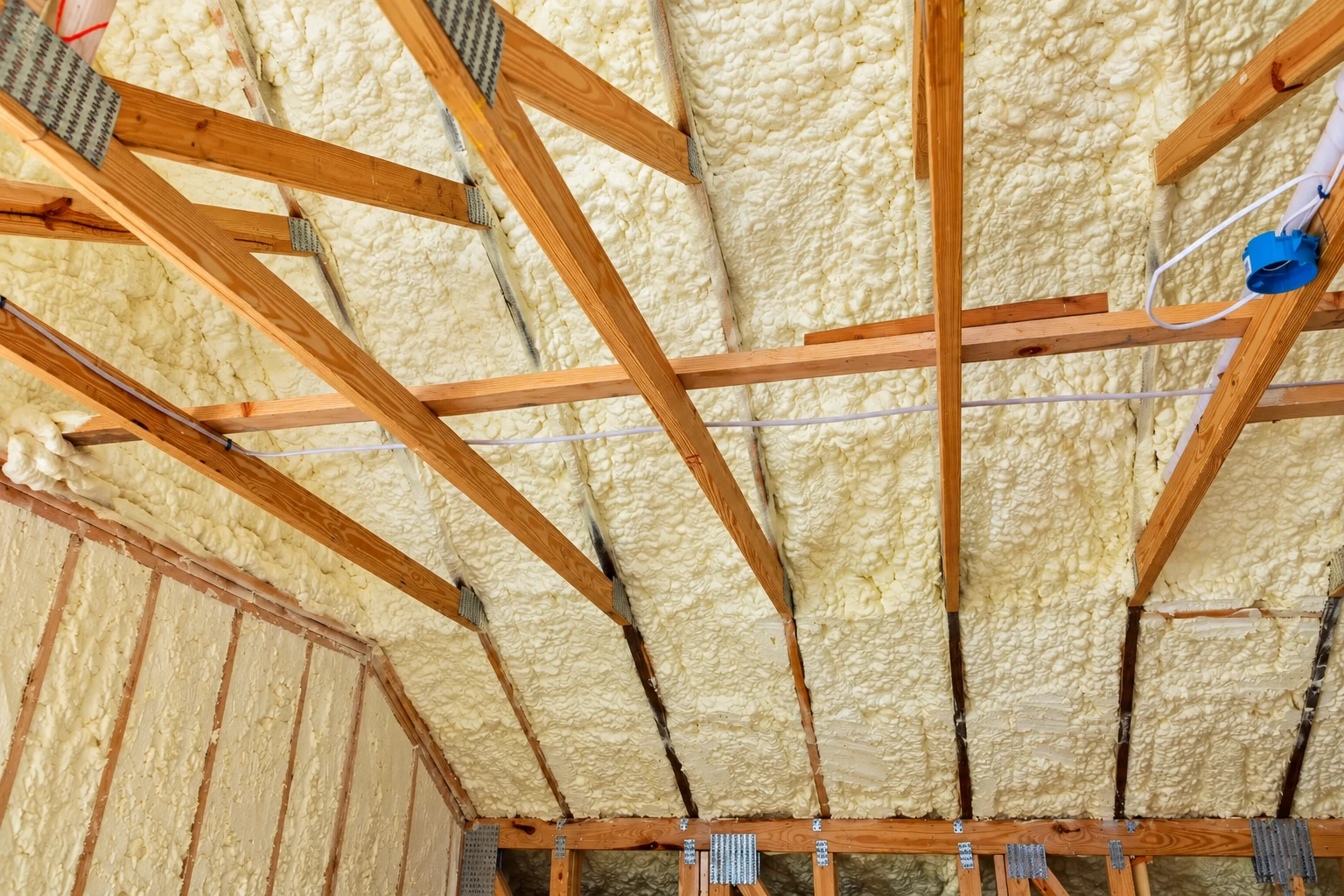
Cellulose and fiberglass each have strengths in weight, settling and how they handle water, and I'll tell you which one fits your attic and why before we order anything. Our crew seals the gaps around pipes, wires and the hatch first, because fill laid over a draft just has air running through it. We set guards around the can lights and put baffles at the eaves, small chutes that keep the vents open so the attic can still breathe and the fill stays out of the soffits. Then we blow the fill out to the edges first and work back toward the hatch, so the edges get as much as the middle instead of the thin rim you find on a rushed job. People sometimes ask about foam instead, and it does seal air while it insulates, but it costs more, and sealing the gaps and topping up with loose fill usually wins unless your ductwork runs through the attic.
Some attics need more than a top-up. If the old fill is soaked, moldy or full of droppings, laying fresh material over it just buries the problem, so we start with insulation removal and a clean floor. And if the attic is only part of why the house feels drafty, with cold floors over a crawl space or a room over the garage that never warms up, we look at home insulation for the whole house.
Work that often goes with it
Insulation removal
When the layer up there is wet, moldy or has been home to animals, it has to come out before anything new goes down.
Home insulation
When the cold floors and drafty rooms go beyond the attic, we look at the walls, floors and crawl space too.
What happens after you call about blown-in insulation in Norman?
Call or send us a message
Tell us what you've noticed, like a hot room or a stain on the ceiling, and we'll set a time for me to come out. If you can peek through the hatch first, how deep the old insulation looks is a big help.
I walk the attic myself
I go through the attic, take photos and explain what I see before I suggest any work. You get it written up, with what has to come first, so you can weigh the cost and compare it with anyone else's.
We fix, seal and fill
A crew I've trained fixes whatever has to come first, seals the gaps, sets the guards and blows in the fill. We cover the floor under the hatch and clean up before we pack the truck.
I check it before we're done
I go back up and check the finished work against what we agreed on, edges and hatch included. Then I show you what changed, so you know your own attic the next time something comes up.
What people ask about blown-in insulation
How much does blown-in insulation cost in Norman, OK?
Attic insulation in the Oklahoma City area usually costs about $1,300 to $4,400 per job. That's the going range for a whole attic around here, not a quote from us, and the size of your attic and the prep it needs decide where you land. I'll give you your own number in writing after I've seen it.
Is cellulose or fiberglass better for blown-in attic insulation?
Pick cellulose if you want a fill that slows air well and costs less, and fiberglass if settling, weight or a roof that has leaked worries you. Cellulose is a fire-retardant fill made from recycled newspaper and boxes, but it sinks about 10 to 20 percent over the years and breaks down if it gets soaked. Fiberglass settles only 2 to 4 percent and isn't ruined by a soaking, though it costs more than the other common loose fills, and it's the one to use in a mobile home ceiling, where cellulose is too heavy.
What is the best way to prep an attic for blown-in insulation?
Seal the air leaks and fix any moisture problem first, because new fill can't do its job over a draft or a wet spot. That means air sealing, closing the small gaps where house air slips into the attic, and having a pro deal with damp insulation, moldy rafters or a fan that vents into the attic. Wet insulation usually means the roof leaks, so plan that repair first, and in a house built before 1930, knob and tube wiring can be a fire hazard where it touches insulation, so a professional corrects it before any fill goes in.
How do I know if my attic has vermiculite insulation?
Vermiculite looks like pea-size, flaky gray pebbles rather than fluff or batts. It may contain asbestos, so leave it alone until an approved lab tests it, and your local health department can name a lab. If I find it, we stop there and don't stir it up or cover it until you know what it is.
Can blown-in insulation go over my old attic insulation?
Yes, new loose fill can go right on top of existing fiberglass batts or blankets, and it doesn't have to be the same material. That's how most top-ups work as long as the old layer is dry and clean, and I'll show you how many inches you already have before we add any.
What licenses should an insulation contractor have in Norman, OK?
Check that whoever works on your house holds the licenses their trade calls for, because the City of Norman requires trade contractor licenses and Oklahoma requires a license or registration for the trades it licenses. The state has no license for general contracting. Norman has also updated its building and energy codes, and federal energy guidance says blown attic insulation should meet or exceed the codes in force, so that's the bar the job should clear. We're licensed and insured, based in Norman, and we do this same work in many cities around it.
Get a written plan for your attic's blown-in insulation
Send the form or email hello@normaninsulation.com, and we'll reply within one business day to set up a free, in-person estimate with no pressure to book. I'll come out myself, look through your attic and show you what I find before anything is suggested.
Explore our services and areas
Services
- Spray foam insulation
- Attic insulation
- Home insulation
- Insulation removal
- Crawl space insulation
- Wall insulation
- Air sealing services
- Basement insulation
- Closed-cell foam insulation
- Open-cell foam insulation
- Commercial insulation
- Crawl space vapor barrier
- Vapor barrier installation
- Attic air sealing
- Retrofit insulation
Have your attic checked before it's filled
Call (405) 561-8031 with a few notes on how deep the old insulation looks, where your can lights are and any roof leaks, and I'll know what to look for.