Attic insulation in Norman OK - an attic that keeps the upstairs comfortable
Hot upstairs rooms and a climbing power bill usually start in the attic. We seal the gaps and add what's missing.
- Service
- Attic insulation
- Call
- (405) 561-8031
How can you tell your attic needs more insulation?
Upstairs stays hot
When the bedrooms upstairs are still warm hours after the AC kicks on, the attic is usually pushing its heat down through thin or patchy insulation. Every summer it goes on, the system runs longer to keep up, and that shows up on the power bill.
Joist tops showing
Pop the hatch, and if you can see the tops of the ceiling joists, there isn't much between your rooms and the attic, which is common in older houses still running on what they were built with. It doesn't get better with time, because loose fill that's been stepped on or has settled only gets thinner.
Dark streaks near lights
Gray or black streaks in the insulation around can lights, the hatch or where pipes come through are dust left behind by air moving through a gap, so the insulation has been working like a furnace filter. Piling more on top won't stop that draft, and those spots keep leaking until somebody seals them.
What's involved in insulating an attic in Norman?
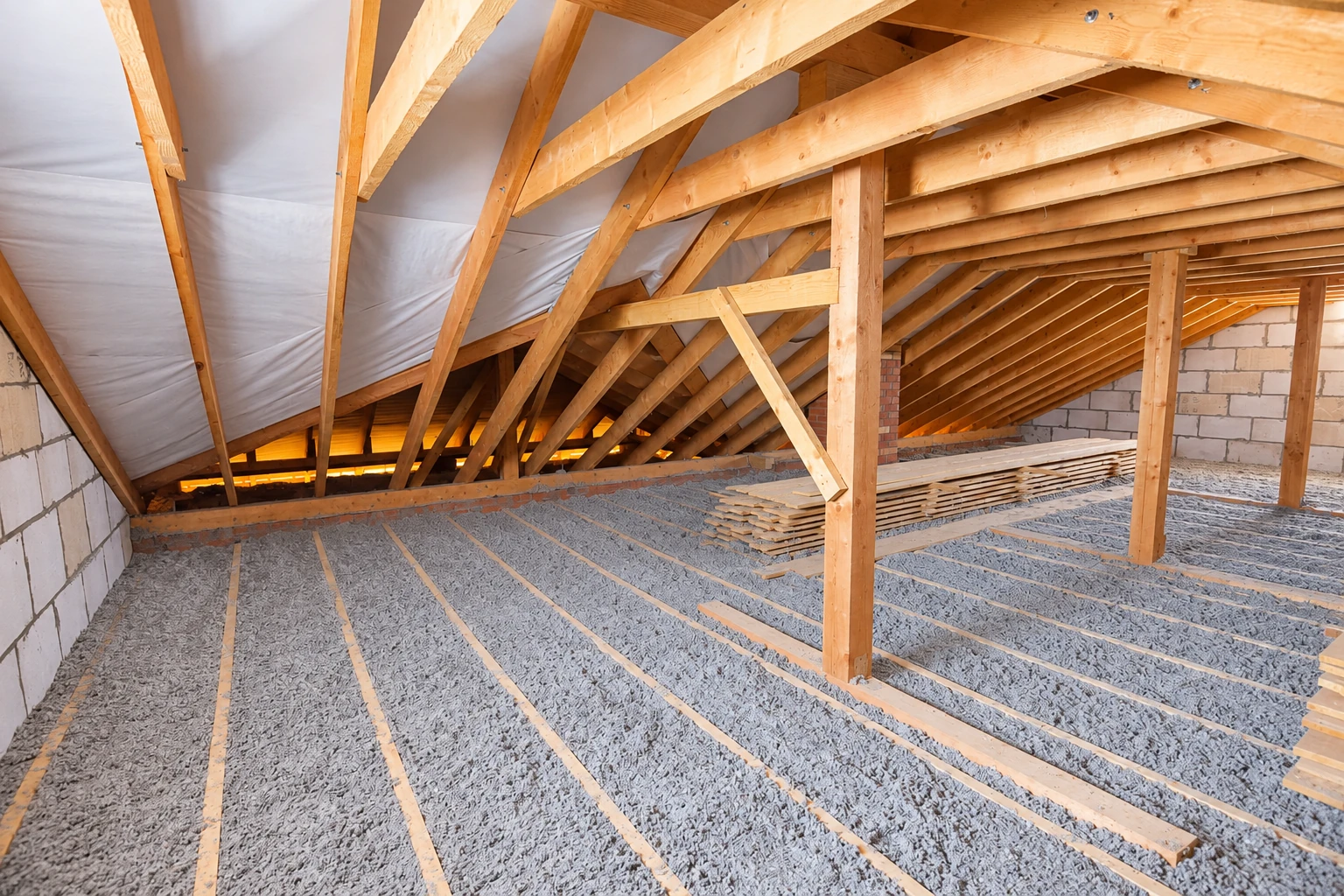
Attic insulation in Norman, OK is adding loose fill or batts, the precut blankets, to your attic until it reaches a recommended level, so summer heat under the roof and winter cold have a harder time getting into the rooms below.
Most people call because the upstairs won't cool down or the bill jumped, and they want to know if the attic is the reason. The price mostly turns on how big the attic is, how many inches are already up there, whether old material has to come out first and how many gaps around lights, pipes and the hatch need closing. The schedule turns on those same things, plus how easy the attic is to get around in. I write all of it up after I've looked, so you have a figure for your own house and can hold it next to anyone else's.
Details to note before an estimate
- Rough size and age of the house
- Inches of insulation already up there
- Hot rooms, drafts or cold floors
- Ducts, can lights or equipment in the attic
How we do attic insulation
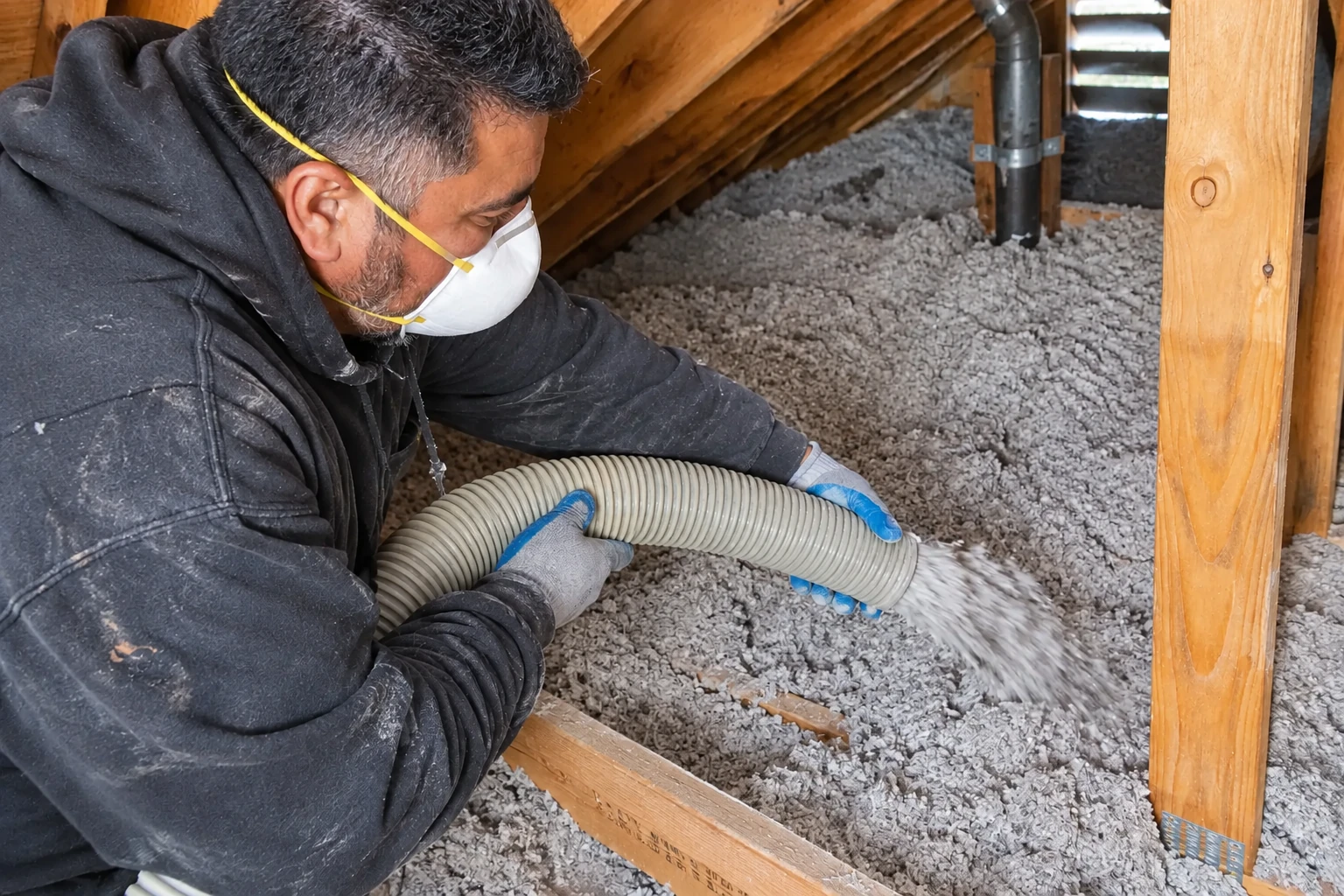
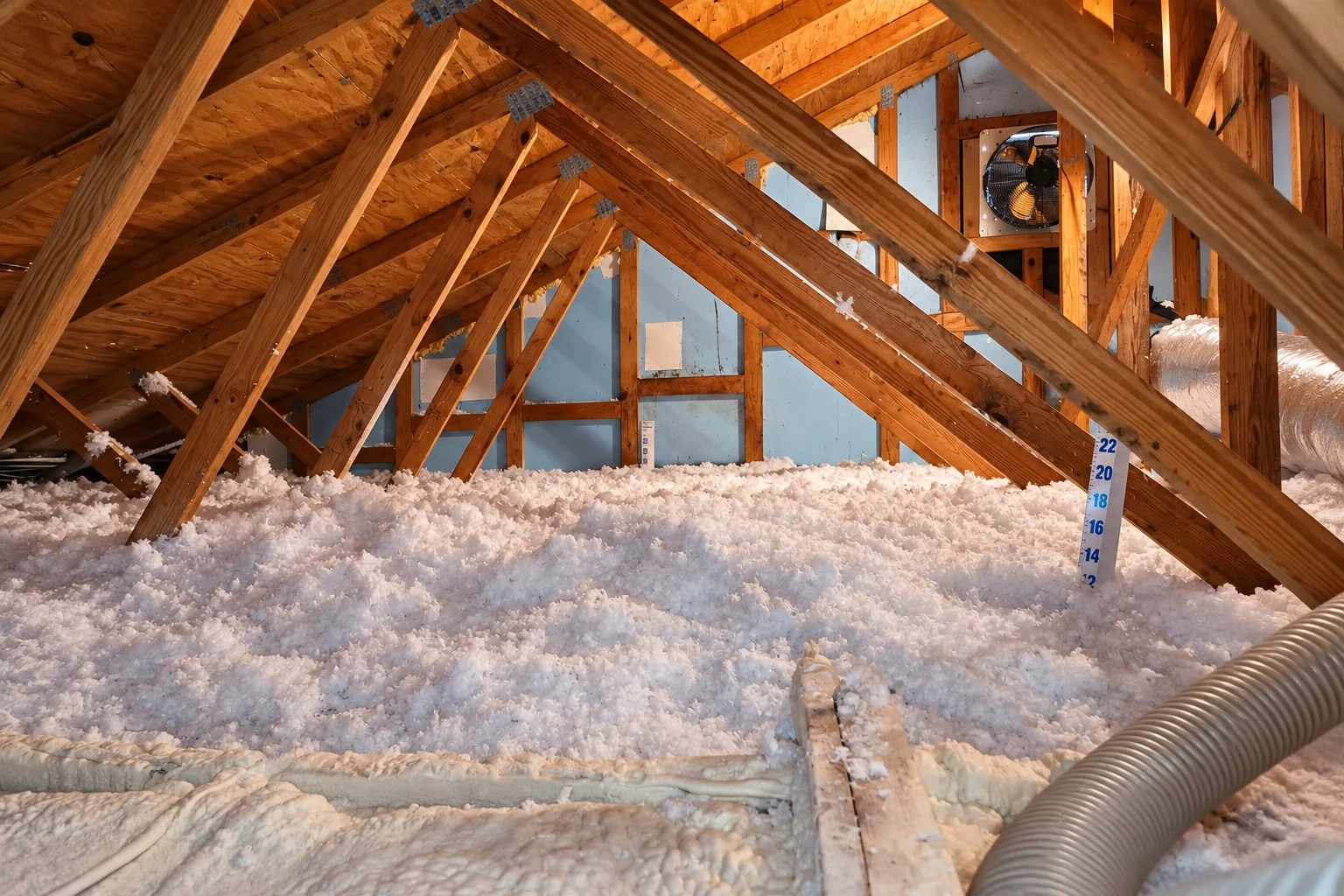
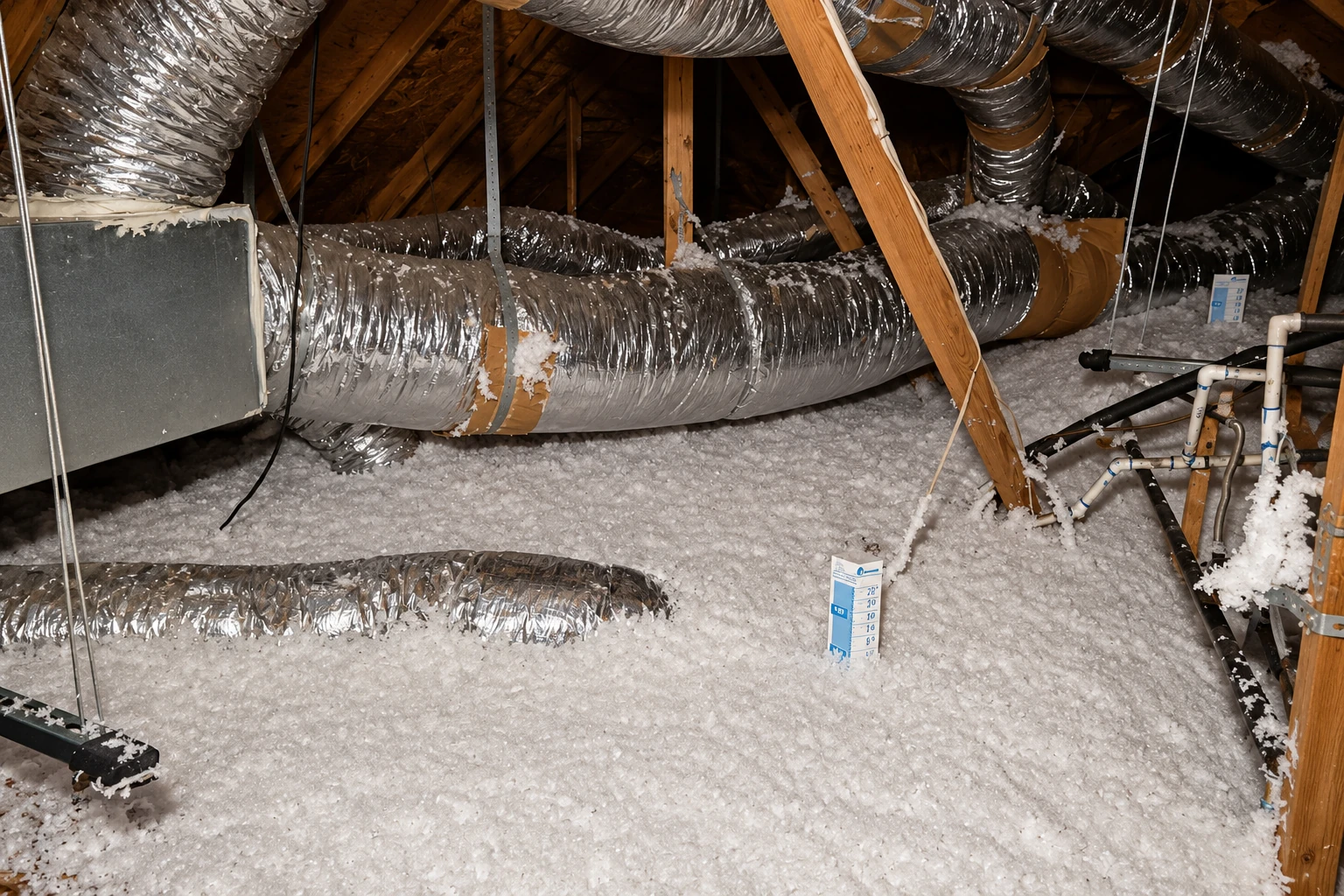
We start by measuring how many inches are already up there, since that tells us how much to add, and I'll tell you honestly whether a radiant barrier, a reflective foil sheet under the roof, makes sense for your attic or isn't worth the money. If the old insulation is soaked or full of droppings, it comes out first, because new material on top just hides the problem. Next comes air sealing, closing the gaps around can lights, pipes and the attic hatch, so the new insulation isn't fighting a draft. Then our crew blows in loose fill through a hose and keeps it as deep at the edges as it is in the middle, because the thin spots over the outside walls are where rushed jobs come up short, and we leave the eave vents clear so the attic can still breathe and the framing stays dry.
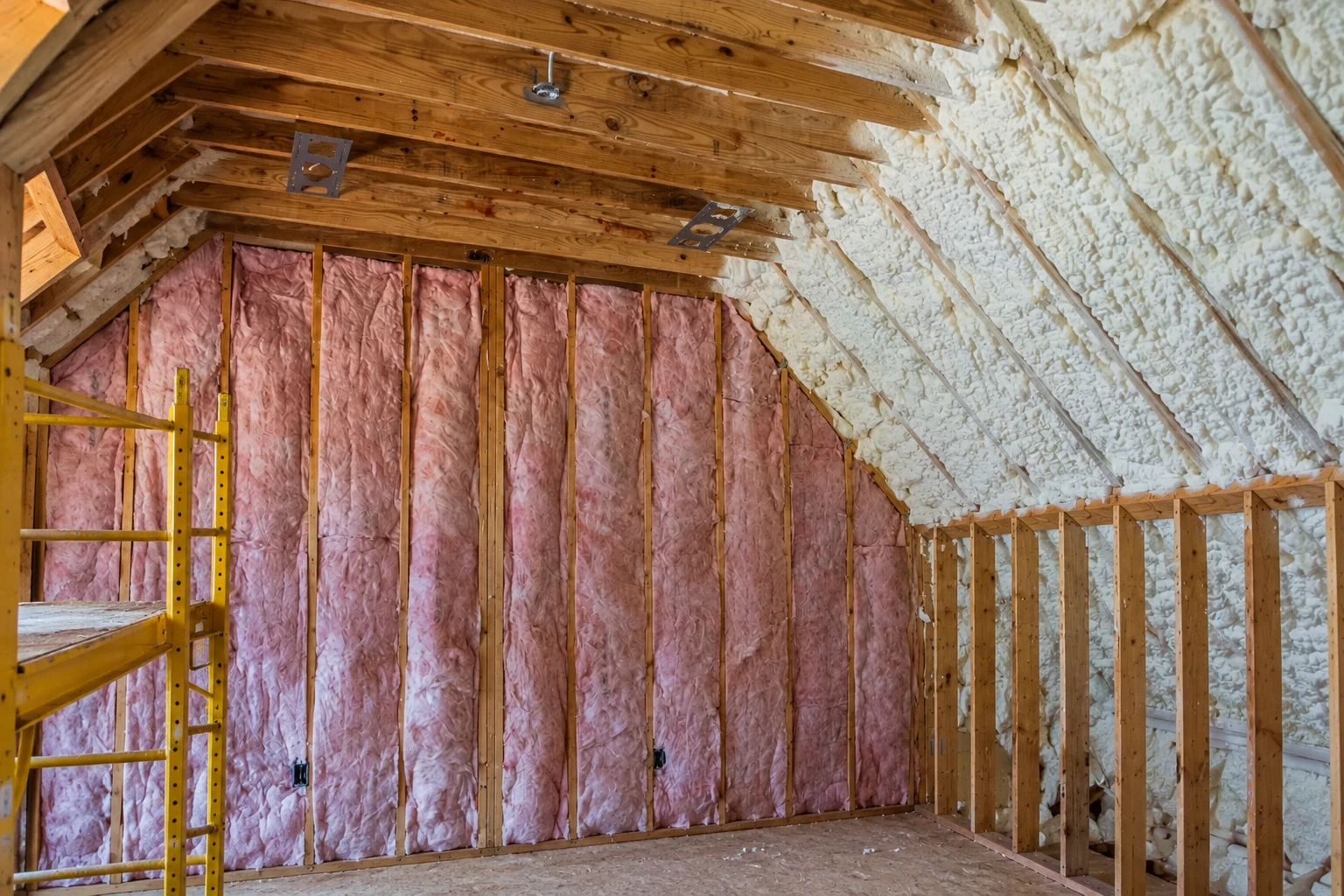
Most attic jobs here end up as blown-in insulation, because sealing the gaps and topping up loose fill usually beats spray foam on cost and does the job well. Foam seals air while it insulates, but it costs more, and I only steer people toward it when the ductwork lives up in the attic. If cold floors or a hot room over the garage tell me the trouble goes past the attic, we'll talk about home insulation for the rest of the house.
Other work that often goes with it
Blown-in insulation
Loose fill settles into odd corners and around wiring, which makes it the usual way to top up an attic that's already partway there.
Home insulation
When drafts and uneven rooms show up all over the house, this looks at the walls and floors along with the attic.
What happens after you call about your attic?
Tell us what you've noticed
Call (405) 561-8031 or fill out the form, and we'll set up a time for me to come out. Mention the hot room, the draft or the bill that jumped, because that's where I'll start looking.
I look through your attic
I come out myself, measure what's up there, take photos and show you what I found before I suggest any work. You get it written up, with what has to come first, so you can compare it with anyone else's.
We seal, insulate and check
A crew I've trained fixes whatever has to come first, seals the gaps and puts in the insulation. Then I check the finished attic against what we agreed on before we call it done.
Questions people ask about attic insulation
How do I know how much attic insulation to add?
Measure what's already up there and compare it with ENERGY STAR's recommended level for your climate zone, which is higher for an attic that starts out bare than for one that already has some. The difference is what you add. Steep sections are the exception, since most insulation makers advise against loose fill on a roof that rises more than four inches for every foot it runs, so those spots get batts instead.
Is a radiant barrier worth adding to my attic in Norman?
It's worth the most in an attic with little or no insulation, where a radiant barrier can cut the heat coming into the house from the attic by about 40%. That isn't 40% off your bill, it usually works out to 8% to 12% of a year's cooling costs. In an attic already at R-30 or better, a rating for how well insulation slows heat, there's very little heat left for it to stop, though it can still help when your heating and cooling ducts run up there, because it keeps them cooler in summer.
How much does attic insulation cost in Norman, OK?
Around the Oklahoma City area, insulation jobs usually run about $1,300 to $4,500 each, and that range takes in every kind of insulation work, not only attics. Where your attic lands comes down to what I mentioned up top, mainly its size, what's already there and how much has to come out or get sealed first. After I've looked, you get a written figure for your house.
Where do I find permit information for attic insulation in Norman?
On the city's Development Services page, which holds building permit information and residential construction applications. Its permit list names things like garage sale and sign permits but doesn't mention attic insulation, so that's the office to ask about your job. Rules differ from city to city, so we check with the city before work starts, and if a permit is needed, we pull it or walk you through getting one. We're licensed and insured.
What is the best way to get an attic ready for new insulation?
Seal the gaps first, because one loose-fill fiberglass maker's instructions say air sealing has to be finished before the insulation goes in for it to perform fully. Oklahoma's weatherization field guide also calls for checking for live knob and tube wiring, the old wire run on porcelain posts, and damming it off when possible or replacing it, and for running exhaust fan ducts outside and insulating them. If a unit with a drip pan sits up there, the pan gets a thorough cleaning so no insulation ends up in the drain line and causes an overflow.
Can attic insulation touch recessed can lights?
Only if the lights are rated IC, which marks them as built to have insulation against them. Lights without that rating need a shield that keeps the insulation clear of the fixture. If you don't know which kind you have, ask, and I'll check when I'm up there.
Get your attic measured and written up
Send us a few details about your house and what you've noticed, and we'll get back to you within one business day to set up a free look. I'll come out myself, go through the attic, take photos and explain what I see before I suggest any work. There's no pressure to book, and the write-up is yours to compare.
Explore our services and areas
Services
- Spray foam insulation
- Blown-in insulation
- Home insulation
- Insulation removal
- Crawl space insulation
- Wall insulation
- Air sealing services
- Basement insulation
- Closed-cell foam insulation
- Open-cell foam insulation
- Commercial insulation
- Crawl space vapor barrier
- Vapor barrier installation
- Attic air sealing
- Retrofit insulation
Ask us to measure your attic
Call (405) 561-8031 or use the form, and tell us if ducts, can lights or a unit with a drip pan sit up there, because each one changes how we get the attic ready.